

 Watch
Watch
 CASUAL WEAR
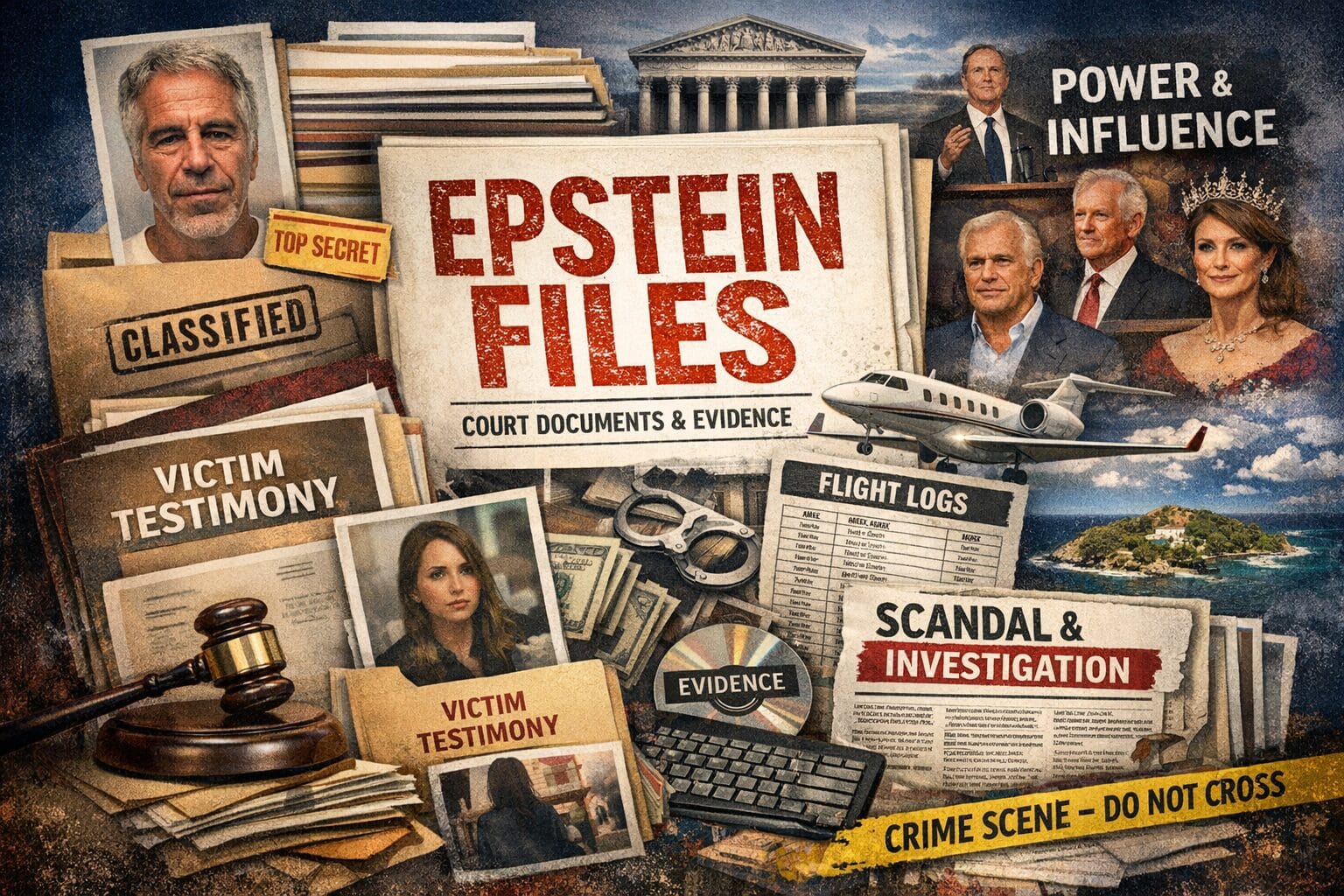
A comprehensive, easy-to-understand guide to the Epstein files — court records, flight logs, testimonies, and unsealed documents. Learn what they contain, who was named, how investigations evolved, and why the case changed global conversations about power, trafficking, and justice.
Introduction: Why the Epstein Files Became One of the Most Important Legal Records of the Century
The term “Epstein files” refers to a massive collection of legal documents connected to financier Jeffrey Epstein, who was accused of running an international sex-trafficking network involving underage victims and influential individuals.
Unlike a typical criminal case, this investigation expanded across decades, countries, and institutions — involving police departments, prosecutors, politicians, billionaires, celebrities, and royalty.
When courts began unsealing documents, the public realized this was not just about one criminal.
It became a case about:
- abuse of power
- institutional failure
- legal immunity deals
- accountability of elites
- protection of victims
Understanding these files helps explain how justice systems sometimes fail — and how transparency can force reform.

Who Was Jeffrey Epstein?
Jeffrey Epstein was a wealthy American financier who cultivated relationships with powerful people worldwide. Despite lacking clear business operations, he maintained private jets, luxury estates, and political connections.
His Known Residences
- Manhattan mansion (New York)
- Palm Beach estate (Florida)
- Little Saint James Island (U.S. Virgin Islands)
- Ranch in New Mexico
- Paris apartment
Authorities later alleged these properties were used in trafficking operations.
What Are the “Epstein Files”?
The Epstein files are not a single document.
They include thousands of pages from multiple investigations.
Main Components of the Files
1. Court Records
Civil lawsuits filed by victims describing recruitment and abuse.
2. Deposition Testimonies
Witness statements taken under oath — including staff members, associates, and accusers.
3. Flight Logs
Records of passengers traveling on Epstein’s private aircraft.
4. Contact Books
Names, phone numbers, and connections across business and political circles.
5. Search Warrants & Evidence Lists
Items seized from properties, including photographs, computers, and storage media.
6. Settlement Agreements
Legal deals negotiated between Epstein, victims, and prosecutors.
The 2008 Non-Prosecution Agreement (The Turning Point)
One of the most controversial elements in the files is the 2008 plea deal.
Federal prosecutors allowed Epstein to:
- plead guilty to lesser state charges
- serve minimal jail time
- obtain immunity for associates
This agreement later became a central issue because victims were not informed — violating federal victim rights laws.
Many legal experts consider this deal a historic example of prosecutorial failure.
The Flight Logs: Why They Caused Global Attention
The flight logs documented passengers aboard Epstein’s private jet over many years.
Important clarification:
Being listed in flight logs does NOT prove criminal activity.
It only shows travel association.
However, the records attracted worldwide attention because they demonstrated the scale of Epstein’s network — across politics, finance, academia, and entertainment.
The Victim Testimonies
Perhaps the most powerful part of the Epstein files comes from survivors’ sworn statements.
They described:
- recruitment through modeling offers
- grooming techniques
- financial manipulation
- pressure from powerful networks
- fear of retaliation
These testimonies shifted the case from a scandal into a major human-rights issue.
2019 Arrest and Death
Epstein was arrested again in 2019 on federal trafficking charges.
Weeks later, he died in jail while awaiting trial.
The death intensified scrutiny because:
- the trial never occurred
- many questions remained unanswered
- attention moved to associates and facilitators
The Unsealing of Court Documents
Courts gradually released previously confidential records.
This transparency had three major effects:
1. Public Awareness Increased
People understood trafficking networks can involve influence, not just secrecy.
2. Institutional Accountability
Law enforcement agencies faced criticism for earlier failures.
3. Civil Litigation Expanded
Victims pursued lawsuits against organizations and enablers.

Why the Epstein Case Changed Law Enforcement Practices
After the files became public, several changes occurred globally:
- stronger trafficking victim protection laws
- reforms in plea deal transparency
- better reporting procedures in schools and workplaces
- increased monitoring of private aviation records
- corporate liability investigations
The case influenced policy discussions in multiple countries.
Media Coverage and Misinformation
Due to the scale of the documents, the case also produced large amounts of misinformation online.
Common misunderstandings:
- Mention equals guilt
- Contact list equals involvement
- Association equals crime
In reality, courts require evidence, testimony, and corroboration — not just names in records.
The Role of Civil Lawsuits
Even after Epstein’s death, legal proceedings continued through civil courts.
Victims pursued cases against:
- estate funds
- organizations accused of negligence
- facilitators and recruiters
Civil litigation allowed compensation and official acknowledgment of harm.
Social Impact: A Cultural Shift
The Epstein files helped accelerate a broader global movement:
From Silence to Reporting
Victims increasingly came forward in unrelated cases.
Power No Longer Guaranteed Protection
Public expectation shifted toward transparency.
Institutional Responsibility
Schools, companies, and governments began mandatory safeguarding policies.
Why the Files Still Matter Today
The documents are studied in law schools, journalism programs, and policy research because they illustrate:
- how influence can obstruct investigations
- importance of victim rights
- necessity of judicial transparency
- dangers of sealed legal settlements
Key Lessons from the Epstein Files
- Wealth cannot replace legal accountability
- Victim protection laws must be enforced early
- Prosecutorial decisions shape decades of justice
- Transparency builds public trust
- Documentation preserves truth beyond individuals
Conclusion
The Epstein files are not merely about one individual’s crimes.
They represent a rare moment when legal records exposed the interaction between power and justice at a global level.
Their significance lies in the reforms they triggered, the survivors they empowered, and the ongoing debate about accountability in modern society.
The case demonstrated a lasting principle:
Justice systems must remain transparent — especially when influence is involved.
Frequently Asked Questions (FAQ) About the Epstein Files
1. What are the Epstein files?
They are a collection of court records, testimonies, flight logs, and investigative documents related to the criminal investigations and civil lawsuits involving Jeffrey Epstein.
2. Are the Epstein files one single document?
No. They consist of thousands of pages released from multiple courts and investigations over several years.
3. Do the files prove everyone named committed crimes?
No. A name appearing in documents does not automatically indicate guilt. Legal responsibility requires evidence and court findings.
4. What is the Epstein contact book?
It is a directory containing phone numbers and contacts of people Epstein interacted with socially, professionally, or casually.
5. What are the flight logs?
They are passenger records from Epstein’s private aircraft showing who traveled on specific dates.
6. Does traveling on the plane mean involvement in illegal activity?
No. Travel association alone does not prove criminal conduct.
7. Why were the documents sealed initially?
Courts often seal records to protect victims’ identities and preserve ongoing investigations.
8. Why were they later unsealed?
Judges determined public interest and transparency outweighed confidentiality in certain civil proceedings.
9. What was the 2008 plea agreement?
A controversial deal where Epstein pled guilty to lesser state charges and avoided federal prosecution at that time.
10. Why was the plea deal criticized?
Victims were not properly informed and prosecutors granted broad immunity to associates.
11. What role did victim testimonies play?
They formed the backbone of later investigations and civil lawsuits.
12. Did Epstein face trial after his 2019 arrest?
No. He died before trial proceedings could occur.
13. What happened after his death?
Civil cases continued against his estate and alleged facilitators.
14. Are investigations still ongoing?
Certain related civil litigation and reviews of institutional conduct continued after the case.
15. What is meant by trafficking in this case?
Recruiting and exploiting minors through coercion, manipulation, or payment.
16. Why is the case globally important?
It exposed systemic failures in handling crimes involving powerful individuals.
17. Did governments change laws after the case?
Several jurisdictions strengthened victim protection and reporting procedures.
18. What are depositions in the files?
Sworn testimonies taken before trial as part of civil litigation.
19. Are media reports always accurate about the files?
Not always. Some reports misinterpret associations as proof of wrongdoing.
20. What is a civil lawsuit in this context?
A legal action seeking compensation rather than criminal punishment.
21. What is the Epstein estate?
Assets left after his death used partly for victim compensation settlements.
22. Why do courts protect victim identities?
To prevent harassment and encourage reporting of abuse.
23. Did institutions face legal consequences?
Some organizations faced lawsuits alleging negligence or facilitation.
24. What lessons did law enforcement learn?
Importance of transparency, documentation, and early intervention.
25. Can sealed documents still exist?
Yes. Some records remain confidential due to privacy or ongoing legal considerations.
26. What is the difference between allegation and conviction?
An allegation is a claim; a conviction is a court-proven determination of guilt.
27. Why did the case receive massive public attention?
Because it involved wealth, influence, and alleged systemic protection failures.
28. How did the case affect public policy debates?
It increased discussions on accountability, privilege, and justice reform.
29. Are researchers still studying the files?
Yes. Legal scholars and journalists analyze them to understand institutional behavior.
30. What is the main takeaway from the Epstein files?

Transparency and strong legal safeguards are essential to protect victims and ensure justice regardless of social status.
Pros and Cons of the Epstein Files Becoming Public
Understanding the release of the Epstein files requires balance. Public transparency can strengthen justice systems, yet widespread disclosure also carries risks — especially in sensitive cases involving victims and unverified allegations.
Advantages (Pros)
1. Increased Transparency in the Justice System
Public access to court records helps society understand how investigations were handled and whether authorities acted appropriately. Transparency builds long-term trust in legal institutions.
2. Empowerment of Victims
The unsealing encouraged other survivors to come forward. Many victims felt validated when their experiences were officially documented rather than dismissed.
3. Institutional Accountability
Law enforcement agencies, prosecutors, and organizations faced scrutiny for earlier decisions. This pressure often leads to policy reforms and improved safeguarding procedures.
4. Legal and Policy Reforms
The case influenced discussions about:
- plea deal disclosure rules
- victims’ rights notification laws
- trafficking reporting obligations
- corporate responsibility standards
5. Educational Value
Law schools, journalists, and policymakers now use the documents as a real-world study of how influence can affect investigations and why checks and balances are necessary.
6. Global Awareness of Trafficking
The scale of publicity increased awareness that trafficking crimes can occur within powerful social circles, not only in hidden criminal networks.
Disadvantages (Cons)
1. Misinterpretation of Names
Many people listed in contact books or travel records were publicly accused online despite no evidence of wrongdoing. Association was often mistaken for guilt.
2. Spread of Misinformation
Partial documents circulated without context, leading to conspiracy narratives and confusion about verified facts.
3. Privacy Concerns
Even with redactions, large-scale document releases risk exposing personal details of victims and unrelated individuals.
4. Trial by Public Opinion
Public debate sometimes replaced legal standards of proof, potentially damaging reputations without due process.
5. Emotional Impact on Survivors
Continuous media attention can retraumatize victims by repeatedly revisiting traumatic events in public discussion.
6. Undermining Legitimate Investigations
Speculation and online accusations can complicate ongoing legal proceedings by influencing witnesses or juries.
Balanced Perspective
The release of the Epstein files demonstrated a difficult truth:
Transparency and responsibility must exist together.
Too much secrecy allows misconduct to remain hidden.
Too much uncontrolled exposure risks harming innocent people and victims.
The challenge for modern justice systems is creating a framework where:
- victims are protected,
- evidence is evaluated properly,
- and the public remains informed without misinformation.
Final Thought
The Epstein files became significant not only because of the crimes alleged, but because they forced society to reconsider how accountability works when power, privacy, and public interest collide.
[…] detailed investigative guide explaining the alleged Indian connections in the Epstein files. Learn what the documents mention, what they do not prove, how global elite networks operated, and […]