

 Watch
Watch
 CASUAL WEAR
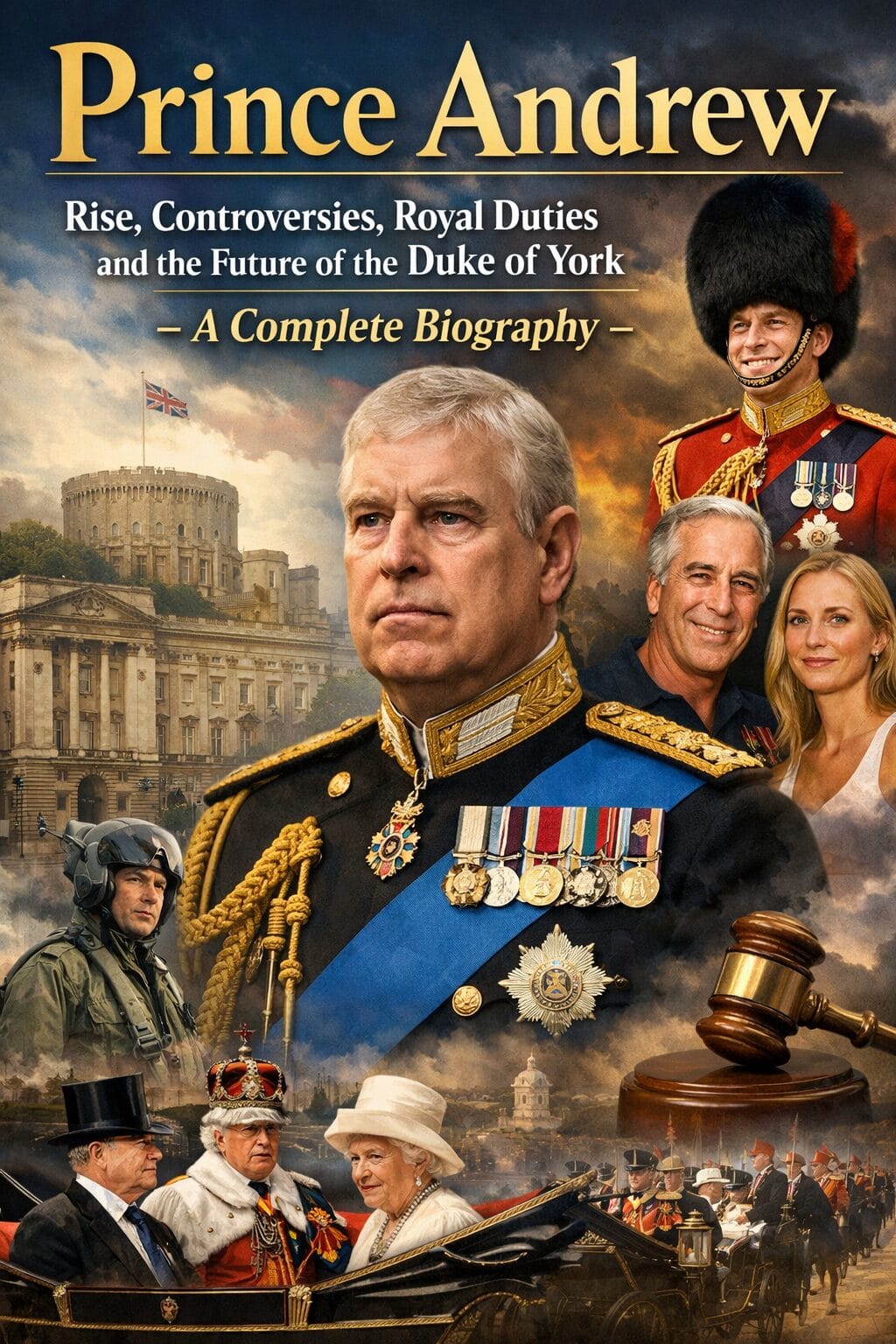
An in-depth biography of Prince Andrew, Duke of York — covering his childhood, naval career, Falklands War role, royal responsibilities, business initiatives, controversies, legal challenges, and his current status within the British royal family.
Introduction
Among the members of the British monarchy, few figures have experienced such a dramatic shift in public perception as Prince Andrew. Once celebrated as a war hero and energetic royal ambassador for British trade, he later became one of the most controversial personalities connected to the modern monarchy.
-Understanding his story requires examining not only his personal actions but also the transformation of the royal family in the digital era — where reputation spreads globally within minutes.
Early Life and Royal Background
Prince Andrew was born on 19 February 1960 at Buckingham Palace in London.
He is the third child of:
- Queen Elizabeth II
- Prince Philip
Position in the Line of Succession
At birth, he was second in line to the throne, after his older brother:
- King Charles III
Growing up inside the monarchy during the 1960s and 70s meant living between two worlds — private family life and constant national attention.
Education
He attended:
- Heatherdown School
- Gordonstoun School (same as his father)
- Britannia Royal Naval College
Unlike many royals today, Andrew followed a fully professional military path rather than primarily ceremonial duties.
Naval Career and The Falklands War


Prince Andrew served as a helicopter pilot in the Royal Navy — a serious and dangerous military role.
Role in the 1982 Falklands War
During the Falklands War, he flew Sea King helicopters on missions including:
- Anti-submarine patrol
- Casualty evacuation
- Decoy missions to attract enemy missiles
This period dramatically boosted his public reputation. British media portrayed him as a courageous royal who accepted real danger rather than ceremonial service.
Marriage and Family Life
In 1986, Prince Andrew married Sarah Ferguson at Westminster Abbey.
The wedding was watched by hundreds of millions worldwide and symbolized a modern royal couple.
Children
They had two daughters:
- Princess Beatrice
- Princess Eugenie
The couple separated in 1992 and divorced in 1996 but remained on friendly terms — unusually close for a divorced royal pair.
Royal Duties and Trade Ambassador Role
For many years, Prince Andrew served as the UK’s Special Representative for International Trade and Investment.
His Responsibilities Included
- Promoting British business overseas
- Supporting trade deals
- Attending economic summits
- Meeting global investors
He traveled extensively across Asia, the Middle East, and the United States, helping British companies access foreign markets.
At this stage, he was seen as a practical, working royal — less ceremonial, more diplomatic.
Association With Jeffrey Epstein
Public perception changed dramatically due to his association with Jeffrey Epstein.
Questions arose about:
- The nature of their relationship
- Visits to Epstein’s properties
- Allegations made by Virginia Giuffre
The situation intensified after a widely criticized 2019 BBC interview where Prince Andrew attempted to explain his connection.
Legal Settlement and Royal Consequences
In 2022, Prince Andrew reached an out-of-court settlement in a civil case in the United States. He denied wrongdoing but agreed financially to resolve the dispute.
Immediate Effects
- Removed from public royal duties
- Military titles returned to the monarch
- No longer allowed to use “HRH” in official capacity
This marked one of the most significant status changes ever experienced by a senior royal in modern history.
Current Status Inside the Royal Family
Today, Prince Andrew is no longer considered a working royal.
He:
- Does not represent the monarchy publicly
- Does not attend official diplomatic tours
- Rarely appears at national ceremonies
However, he still attends private family events and religious gatherings.
Public Image Transformation
Prince Andrew’s reputation followed three clear phases:
| Period | Public Perception |
|---|---|
| 1982–1990 | War hero |
| 1990–2015 | Active working royal |
| 2019–Present | Controversial former royal |
His story reflects how modern media scrutiny affects institutions built on tradition.
Impact on the Modern Monarchy
The situation accelerated reforms inside the British royal family:
- Greater transparency expectations
- Reduced working royals
- Reputation management strategies
- Clear separation between private members and official duties
It highlighted how public trust became central to royal survival in the internet era.
Key Facts About Prince Andrew
- Born: 1960
- Title: Duke of York
- Naval rank: Commander
- War service: Falklands War
- Marriage: Sarah Ferguson (divorced)
- Children: Beatrice & Eugenie
- Current role: Private royal family member
Pros and Criticisms
Supporters Say
- Served in active combat
- Promoted British business globally
- Dedicated father
Critics Say
- Poor judgment in associations
- Mishandled public communication
- Damaged monarchy reputation
Frequently Asked Questions (FAQ)
1. Is Prince Andrew still a working royal?
No.
2. Does he still have royal title?
Yes, but not HRH for official duties.
3. Was he in the military?
Yes, Royal Navy pilot.
4. Did he fight in war?
Yes, Falklands War.
5. Who was his wife?
Sarah Ferguson.
6. How many children?
Two daughters.
7. Why controversial?
Association with Jeffrey Epstein.
8. Did he go to prison?
No.
9. Does he attend royal events?
Only private family ones.
10. What is his current role?
Non-working royal.
Conclusion
Prince Andrew’s life is one of the most dramatic arcs in modern royal history — from decorated naval officer to withdrawn royal figure.
His story illustrates a broader truth:
In the 21st century, even centuries-old institutions must adapt to transparency, accountability, and global public scrutiny.
The monarchy continues evolving, and Prince Andrew remains a significant — though controversial — part of that transformation.
A really good blog and me back again.