

 Watch
Watch
 CASUAL WEAR

Introduction
Single Band Router vs Dual Band Router:-In today’s digital world, the internet is the backbone of communication, entertainment, and work. Choosing the right Wi-Fi router is just as important as selecting the right internet plan. If you’ve ever shopped for a router, you’ve probably come across the terms single band router and dual band router. But what do they mean? And more importantly—which one is right for you?
This article will give you a detailed breakdown of single band vs dual band routers, including their features, performance, pros and cons, and which situations they are best suited for. By the end, you’ll know exactly which router type to buy.
What is a Single Band Router?
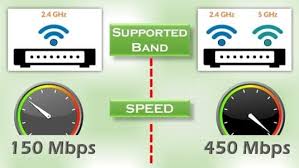
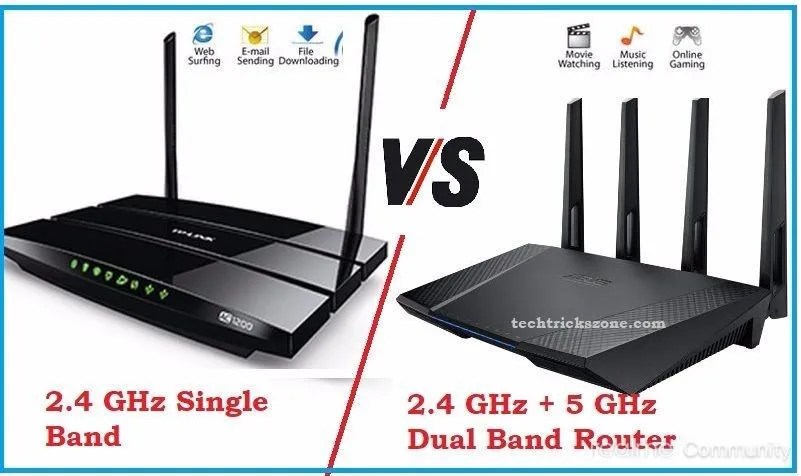
A single band router is a Wi-Fi router that operates on one frequency band, specifically the 2.4 GHz band. It’s one of the most basic types of routers and is widely used for home and small office networks.
Key Features of Single Band Routers:
- Frequency: Only 2.4 GHz.
- Range: Provides a longer coverage area, ideal for homes with multiple rooms.
- Compatibility: Works with almost all Wi-Fi-enabled devices, including older smartphones, laptops, and IoT devices.
- Cost: Generally more affordable than dual or tri-band routers.
Advantages:
- Longer Coverage: 2.4 GHz signals penetrate walls and obstacles better than 5 GHz.
- Simple Setup: Easier to configure with fewer settings.
- Budget-Friendly: Lower cost makes it ideal for users with basic internet needs.
Disadvantages:
- Slower Speeds: Limited maximum data transfer compared to 5 GHz or dual-band routers.
- More Interference: The 2.4 GHz band is crowded with devices like microwaves, cordless phones, and other Wi-Fi networks.
- Performance Issues with Multiple Devices: Network speed may drop if several devices connect simultaneously.
Ideal Users:
- Small households or offices with few devices.
- Users who primarily browse the web, check emails, or stream videos occasionally.
- Those seeking a cost-effective Wi-Fi solution with longer coverage.
What is a Dual Band Router?
A dual band router is a Wi-Fi router that operates on two frequency bands simultaneously: 2.4 GHz and 5 GHz. By providing two separate bands, it offers greater speed, reduced interference, and better performance for multiple devices.
Key Features of Dual Band Routers:
- Frequency Bands: 2.4 GHz (longer range) and 5 GHz (higher speed).
- Device Compatibility: Supports both older and modern devices.
- Bandwidth Management: Efficiently handles multiple devices simultaneously.
- Advanced Features: Many include QoS (Quality of Service), MU-MIMO, and guest networks.
Advantages:
- Higher Speeds: 5 GHz band allows faster data transfer, ideal for streaming, gaming, and large downloads.
- Reduced Interference: 5 GHz is less crowded than 2.4 GHz, resulting in a more stable connection.
- Better Performance for Multiple Devices: Handles several devices efficiently without slowing down.
- Flexibility: Devices can automatically connect to the best available band depending on speed and distance.
Disadvantages:
- Shorter Range on 5 GHz: 5 GHz signals don’t penetrate walls as well as 2.4 GHz.
- Higher Cost: Typically more expensive than single band routers.
- Slightly Complex Setup: Users may need to manage two SSIDs or configure bands for optimal performance.
Ideal Users:
- Homes or offices with multiple devices connected simultaneously.
- Users who stream HD/4K videos, play online games, or download large files.
- Residents in dense Wi-Fi areas with high interference.
- Households with smart home devices requiring reliable connectivity.
Key Differences: Single Band Router vs Dual Band Router
Choosing the right router depends on understanding the differences between single band and dual band routers. Here’s a clear comparison:
| Feature | Single Band Router | Dual Band Router |
|---|---|---|
| Frequency | 2.4 GHz only | 2.4 GHz + 5 GHz |
| Speed | Up to 300–600 Mbps | Up to 1000 Mbps or more |
| Coverage | Wide coverage | Wide (2.4 GHz) + shorter range (5 GHz) |
| Interference | High (from other devices) | Low on 5 GHz band |
| Device Compatibility | All older devices supported | Works with modern + old devices |
| Price | Budget-friendly | Higher price but better value |
| Best For | Light browsing, emails, IoT | Streaming, gaming, video calls, work |
Summary of Differences:
- Speed: Dual band routers are faster due to the 5 GHz band.
- Range: Single band routers have better range through walls and obstacles.
- Device Handling: Dual band routers perform better when multiple devices are connected simultaneously.
- Interference: Dual band routers experience less network interference, especially in crowded areas.
- Cost: Single band routers are more budget-friendly, while dual band routers offer better performance for a slightly higher price.
Understanding these differences helps you select the router that fits your household size, device usage, and internet speed needs.
Which One Should You Choose?
Choose a Single Band Router if:
A single band router can be a smart choice depending on your internet needs, household size, and budget. While dual band routers offer faster speeds and better performance, single band routers are simpler, affordable, and effective for basic tasks.
1. You Have a Small Household or Few Devices
- Ideal for 1–3 devices connected to Wi-Fi.
- Works well for light internet usage like browsing, emails, and occasional video streaming.
2. Your Internet Usage is Basic
- Perfect for web browsing, social media, and online classes.
- Doesn’t require high-speed connections for multiple devices or heavy streaming.
3. You Need Longer Coverage
- The 2.4 GHz band penetrates walls and obstacles better than 5 GHz.
- Great for larger homes or apartments where coverage is more important than speed.
4. You’re Budget-Conscious
- Single band routers are more affordable than dual band models.
- Offers a cost-effective solution for users who don’t need high-speed internet for multiple devices.
5. You Have Older Devices
- Works seamlessly with older smartphones, laptops, and IoT devices that may not support 5 GHz.
Summary:
Choose a single band router if your goal is basic internet usage, longer coverage, and cost-effectiveness. It’s perfect for smaller households or users who do not require high-speed connections for multiple devices.

Choose a Dual Band Router if:
A dual band router is ideal for users who need faster speeds, reliable connections, and the ability to handle multiple devices simultaneously. It’s a step up from single band routers, providing both 2.4 GHz and 5 GHz bands for maximum performance.
1. You Have Multiple Devices
- Perfect for households or offices with several smartphones, laptops, smart TVs, and IoT devices.
- Handles multiple connections efficiently without slowing down the network.
2. You Stream HD/4K Videos or Play Online Games
- The 5 GHz band ensures fast, stable connections for streaming and gaming.
- Reduces buffering, lag, and interruptions during high-bandwidth activities.
3. You Live in a Dense or Crowded Area
- In apartments or urban areas with many neighboring Wi-Fi networks, the 5 GHz band experiences less interference.
- Ensures a smoother and more reliable connection.
4. You Have Smart Home Devices
- Supports multiple smart home gadgets like cameras, speakers, and appliances.
- Efficiently manages network traffic so all devices remain connected without performance drops.
5. You Want a Future-Proof Network
- Ideal for modern households where internet speed requirements may increase over time.
- Supports faster internet plans, new devices, and future technologies like Wi-Fi 6.
6. You Prioritize Speed and Performance
- Provides higher maximum speeds than single band routers.
- Devices can switch automatically to the best available band depending on distance and usage.
Summary:
Choose a dual band router if you need high-speed internet, multiple device support, reduced interference, and a future-proof network. It’s ideal for modern homes, gamers, streamers, and anyone looking for a reliable and efficient Wi-Fi network.
Future Consideration: Wi-Fi 6 & Tri-Band Routers
As internet usage grows and homes and offices add more devices, advanced routers are becoming increasingly important. Beyond single band and dual band routers, Wi-Fi 6 and tri-band routers offer next-level performance, speed, and efficiency.
1. Wi-Fi 6 Routers
Wi-Fi 6 (802.11ax) is the latest Wi-Fi standard, designed to handle modern high-speed internet needs and multiple devices.
Advantages:
- Faster Speeds: Higher data transfer rates compared to previous Wi-Fi standards.
- Better Device Management: Efficiently handles multiple devices simultaneously using technologies like MU-MIMO and OFDMA.
- Lower Latency: Reduces delays, making it ideal for gaming and video calls.
- Future-Proof: Compatible with upcoming devices and higher-speed internet plans.
Considerations:
- Typically more expensive than older routers.
- Only newer devices can fully utilize Wi-Fi 6 benefits, though older devices remain compatible.
2. Tri-Band Routers
Tri-band routers add a third frequency band—usually one 2.4 GHz and two 5 GHz bands—to reduce network congestion and improve performance.
Advantages:
- Enhanced Performance: Supports multiple high-bandwidth devices without slowing down.
- Optimized Network Traffic: Each band can be dedicated to specific devices or activities.
- Ideal for Smart Homes & Offices: Perfect for gaming, 4K streaming, and large households with many connected devices.
Considerations:
- Higher cost compared to dual band routers.
- Slightly more complex setup, requiring proper management of three bands.
Who Should Consider These Options?
- Large households with many connected devices.
- Users who stream 4K/8K videos, play online games, or run smart home systems.
- Offices needing stable, high-speed connections for multiple employees.
- Anyone wanting to future-proof their network for upcoming internet and device requirements.
Investing in Wi-Fi 6 or tri-band routers ensures maximum speed, minimal interference, and robust performance, making them ideal for high-demand users who want a seamless online experience.
Conclusion
Choosing the right router is essential for ensuring a fast, stable, and reliable Wi-Fi network. Understanding the differences between single band and dual band routers helps you make an informed decision based on your household size, internet usage, number of devices, and budget.
- Single band routers are ideal for small households, basic browsing, and budget-conscious users, offering longer coverage but lower speeds.
- Dual band routers are perfect for homes or offices with multiple devices, high-bandwidth activities, streaming, and gaming, providing faster speeds and reduced interference.
- For advanced needs, tri-band routers and Wi-Fi 6 routers offer future-proof performance, better device management, and enhanced speeds, making them suitable for large households, smart homes, and high-demand users.
By selecting the right router and optimizing its placement and settings, you can maximize your internet performance, enjoy seamless connectivity, and future-proof your network for years to come.
FAQs: Single Band Router vs Dual Band Router
General Questions
Q1. What is a single band router?
A single band router operates on the 2.4 GHz frequency only, offering longer coverage but lower speeds.
Q2. What is a dual band router?
A dual band router operates on both 2.4 GHz and 5 GHz bands, providing faster speeds and less interference.
Q3. What is a tri-band router?
A tri-band router has three frequency bands—typically one 2.4 GHz and two 5 GHz bands—for better performance with multiple devices.
Q4. What is Wi-Fi 6?
Wi-Fi 6 (802.11ax) is the latest Wi-Fi standard with higher speeds, improved device management, and lower latency.
Q5. Can a single band router support multiple devices?
Yes, but performance may degrade as more devices connect simultaneously.
Q6. Can older devices connect to a dual band router?
Yes, older devices usually connect via the 2.4 GHz band.
Q7. Is a dual band router necessary for light browsing?
Not necessarily. Single band routers are sufficient for basic internet usage.
Q8. Is 5 GHz faster than 2.4 GHz?
Yes, 5 GHz offers faster speeds but shorter coverage range.
Q9. Does dual band reduce interference?
Yes, the 5 GHz band is less crowded, reducing interference.
Q10. Can dual band routers handle smart home devices?
Yes, they efficiently manage multiple devices including smart home gadgets.
Speed and Performance
Q11. Which router type is faster?
Dual band routers are faster due to the 5 GHz band.
Q12. Does 2.4 GHz penetrate walls better?
Yes, 2.4 GHz signals have longer range and penetrate walls more effectively.
Q13. Can single band routers stream HD videos?
Yes, but performance may drop if multiple devices are connected.
Q14. Which band is better for gaming?
5 GHz is ideal due to higher speed and lower latency.
Q15. Can dual band routers improve streaming quality?
Yes, devices can use the best band, reducing buffering.
Q16. Do dual band routers have higher maximum speeds?
Yes, especially on the 5 GHz band.
Q17. How does a tri-band router improve performance?
It splits traffic across three bands, reducing congestion and supporting more devices.
Q18. Does Wi-Fi 6 increase speed for all devices?
Only devices supporting Wi-Fi 6 benefit fully; older devices connect at lower speeds.
Q19. Can dual band routers reduce network congestion?
Yes, by allowing devices to connect on separate bands.
Q20. Does router placement affect speed?
Yes, central placement and avoiding obstacles maximize coverage and speed.
Coverage and Range
Q21. Which has longer range: 2.4 GHz or 5 GHz?
2.4 GHz has longer range; 5 GHz is faster but shorter range.
Q22. Can dual band routers cover large homes?
Yes, 2.4 GHz ensures wider coverage while 5 GHz provides high-speed connections nearby.
Q23. Can single band routers penetrate multiple walls?
Yes, 2.4 GHz is better at passing through walls.
Q24. How can I extend Wi-Fi coverage?
Use Wi-Fi extenders, mesh networks, or optimal router placement.
Q25. Are dual band routers better for apartments?
Yes, the 5 GHz band reduces interference in crowded areas.
Q26. Can a tri-band router cover a large office?
Yes, it efficiently handles multiple high-demand devices.
Q27. Does Wi-Fi 6 improve coverage?
Yes, Wi-Fi 6 provides better signal efficiency and reliability.
Q28. Can multiple routers improve range?
Yes, mesh systems or additional access points extend coverage.
Q29. Do range extenders work with dual band routers?
Yes, they can extend both 2.4 GHz and 5 GHz networks.
Q30. How far can 5 GHz reach in a typical home?
Approximately 30–50 feet indoors, depending on walls and obstacles.
Cost and Budget
Q31. Are single band routers cheaper?
Yes, they are more affordable than dual or tri-band routers.
Q32. Is it worth paying more for a dual band router?
Yes, if you have multiple devices or high-speed internet needs.
Q33. Are Wi-Fi 6 routers expensive?
Yes, but they offer long-term performance benefits.
Q34. Can I save money with a single band router?
Yes, if usage is light and you don’t need high-speed internet for many devices.
Q35. Do tri-band routers justify their cost?
For large households or offices with many devices, yes.
Q36. Are refurbished dual band routers reliable?
They can be, but check warranty and condition before purchase.
Q37. Is a single band router sufficient for a student dorm?
Yes, if only a few devices use the internet lightly.
Q38. Can dual band routers reduce future upgrade costs?
Yes, they future-proof your network.
Q39. Are dual band routers more energy-consuming?
Slightly, but the difference is minimal.
Q40. Does Wi-Fi 6 save energy for devices?
Yes, Wi-Fi 6 improves efficiency and reduces power consumption.
Setup and Maintenance
Q41. Are single band routers easier to set up?
Yes, simpler settings and one SSID make setup easy.
Q42. Are dual band routers hard to configure?
They may require managing separate SSIDs, but modern routers simplify this.
Q43. Can I change bands manually?
Yes, you can assign devices to 2.4 GHz or 5 GHz as needed.
Q44. Do routers need firmware updates?
Yes, updates improve performance, security, and compatibility.
Q45. Can I prioritize devices on a dual band router?
Yes, use QoS (Quality of Service) settings to prioritize bandwidth.
Q46. How often should I upgrade my router?
Every 3–5 years or when new devices and speeds exceed your current router.
Q47. Can dual band routers work with mesh systems?
Yes, many support mesh networks for extended coverage.
Q48. Can I mix single and dual band routers in the same network?
Yes, but performance will depend on the device and band used.
Q49. Do Wi-Fi 6 routers support older devices?
Yes, they are backward compatible with Wi-Fi 4 and Wi-Fi 5 devices.
Q50. Which router is best for future-proofing?
Dual band or tri-band Wi-Fi 6 routers are ideal for multiple devices, faster speeds, and future internet requirements.
Advanced Features & Technology
Q51. What is MU-MIMO technology?
Multi-User, Multiple Input, Multiple Output allows a router to communicate with multiple devices simultaneously.
Q52. What is OFDMA?
Orthogonal Frequency-Division Multiple Access improves efficiency by splitting channels for multiple devices at the same time.
Q53. What is QoS in routers?
Quality of Service lets you prioritize bandwidth for specific devices or applications.
Q54. Can I use a dual band router for gaming consoles?
Yes, connect the console to the 5 GHz band for faster, stable speeds.
Q55. Can Wi-Fi 6 improve video conferencing?
Yes, lower latency and higher speed reduce lag and improve call quality.
Q56. What is beamforming?
Beamforming directs Wi-Fi signals toward devices for stronger, more focused coverage.
Q57. Can single band routers use beamforming?
Some modern single band routers support basic beamforming, but it’s more common in dual/tri-band models.
Q58. Can dual band routers support VPNs?
Yes, most dual band routers allow VPN setup.
Q59. Are tri-band routers good for home offices?
Yes, they manage multiple devices efficiently, ideal for remote work.
Q60. Can I use a single band router with a mesh network?
Yes, but performance may be limited compared to dual or tri-band routers.
Practical Use Cases
Q61. Which router is best for a small apartment?
Single band routers are usually sufficient unless multiple devices require high-speed internet.
Q62. Which router is best for large homes?
Dual band or tri-band routers provide coverage and speed for multiple rooms.
Q63. Can a dual band router reduce Wi-Fi dead spots?
Yes, especially when combined with proper placement or mesh systems.
Q64. Are Wi-Fi 6 routers better for smart homes?
Yes, they efficiently manage multiple IoT devices simultaneously.
Q65. Can dual band routers support online gaming?
Yes, the 5 GHz band provides low latency and fast speeds for gaming.
Q66. Can I use dual band routers for HD streaming?
Yes, multiple devices can stream HD or 4K content without buffering.
Q67. Are dual band routers ideal for shared offices?
Yes, they handle multiple employees and devices efficiently.
Q68. Can a single band router handle video calls?
Yes, but performance may degrade with multiple simultaneous users.
Q69. Do tri-band routers prevent congestion better than dual band?
Yes, the extra band reduces network traffic, improving performance for high-demand users.
Q70. Should I upgrade to a tri-band or Wi-Fi 6 router?
If you have many devices, high-speed internet, or plan for future needs, upgrading ensures faster, stable, and future-proof connectivity.

Useful tips and friendly tone — a winning combination. Thanks!
Glad to hear that! Happy to know
[…] Phone Repair Near Me:- In today’s fast-paced world, smartphones have become indispensable. From work communication to personal entertainment, our mobile devices […]