




Bhushan Steel Case Study: From Rapid Expansion and Debt Crisis to Tata Steel Acquisition – 2026

Introduction
The Bhushan Steel case study is one of the most important corporate restructuring and insolvency case studies in modern Indian business history. The story of Bhushan Steel Limited demonstrates how aggressive expansion, heavy leverage, changing market conditions, operational challenges and corporate debt can create financial stress in a large industrial company—and how the Insolvency and Bankruptcy Code (IBC) can be used to resolve such a situation.
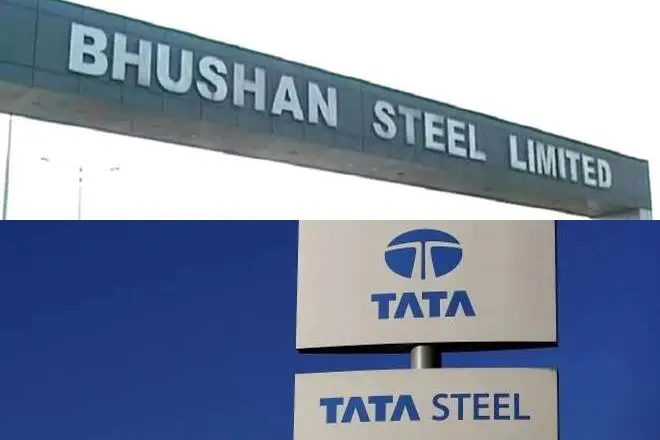
Bhushan Steel, once one of India’s significant private-sector steel manufacturers, eventually entered the corporate insolvency resolution process under India’s newly introduced insolvency framework. The company attracted interest from major strategic investors, including Tata Steel. Tata Steel ultimately emerged as the successful resolution applicant, and the acquisition was completed in May 2018 through its wholly owned subsidiary Bamnipal Steel Limited.
Following the acquisition, Bhushan Steel was renamed Tata Steel BSL Limited. Tata Steel described the acquisition as value-accretive because it provided additional capacity, downstream integration, a complementary product mix and better access to important northern and western Indian markets.
This Bhushan Steel case study examines the company’s history, business model, expansion strategy, debt crisis, insolvency proceedings, Tata Steel acquisition, strategic rationale, lessons for entrepreneurs and the broader significance of the case for Indian corporate restructuring.
Table of Contents
- What Was Bhushan Steel?
- Bhushan Steel Company History
- Bhushan Steel Business Model
- Expansion Strategy of Bhushan Steel
- The Rise of Financial Stress
- Bhushan Steel Debt Crisis
- Bhushan Steel and the Insolvency and Bankruptcy Code
- Corporate Insolvency Resolution Process
- Tata Steel’s Entry
- Tata Steel vs Other Resolution Applicants
- Acquisition of Bhushan Steel
- Role of Bamnipal Steel
- Bhushan Steel Becomes Tata Steel BSL
- Strategic Logic Behind the Acquisition
- Operational Synergies
- Downstream Integration
- Capacity and Manufacturing Assets
- What Happened After the Acquisition?
- Tata Steel BSL Merger
- Key Financial and Strategic Lessons
- SWOT Analysis of Bhushan Steel
- Porter’s Five Forces Analysis
- Business Strategy Lessons
- Corporate Governance Lessons
- IBC Lessons
- Lessons for Entrepreneurs
- Lessons for Investors
- Frequently Asked Questions
- Conclusion
1. What Was Bhushan Steel?
Bhushan Steel Limited was an Indian steel manufacturing company that developed significant manufacturing capacity and a downstream steel-products business.
The company became particularly important because of its manufacturing facility in Odisha and its position in value-added steel products.
However, Bhushan Steel’s growth was accompanied by substantial borrowing. As the company’s financial obligations became difficult to manage, its debt burden became a major issue.
Eventually, the company became one of the prominent large corporate cases processed under India’s new insolvency framework.
The Bhushan Steel insolvency case became particularly significant because Tata Steel eventually acquired the company through the IBC resolution process.
2. Bhushan Steel Company History
The history of Bhushan Steel is closely connected with India’s industrialisation and the growth of private-sector steel manufacturing.
The company pursued a strategy of expanding steel production capacity and moving into downstream and value-added products.
Its manufacturing assets gave the company a significant industrial footprint.
However, steel is a highly capital-intensive industry.
Building steel plants requires enormous amounts of capital for:
- Land
- Plant and machinery
- Blast furnaces
- Rolling mills
- Power
- Raw materials
- Transportation
- Working capital
- Environmental infrastructure
- Logistics
Therefore, rapid capacity expansion often requires substantial debt financing.
This creates a fundamental business challenge:
Debt can accelerate growth when capacity generates adequate returns, but the same debt can become dangerous when cash flows fail to keep pace with repayment obligations.
This principle is central to understanding the Bhushan Steel case study.
3. Bhushan Steel Business Model
The company’s business model was based on steel manufacturing and downstream value-added products.
Instead of focusing exclusively on commodity steel, the company developed capabilities in products used by industries such as:
- Automotive
- Construction
- Engineering
- Consumer durables
- Infrastructure
This strategy can potentially improve margins because value-added products can command better realisations than basic commodity products.
The problem, however, is that downstream integration requires additional capital expenditure.
Therefore, the company faced two simultaneous requirements:
- Capital to expand primary steel manufacturing
- Capital to develop downstream processing capabilities
This created a capital-intensive growth model.
4. Expansion Strategy of Bhushan Steel
Bhushan Steel’s expansion strategy was based largely on increasing manufacturing capacity and developing an integrated steel operation.
From a strategic perspective, this approach made sense.
A larger steel operation can potentially generate:
- Economies of scale
- Lower unit production costs
- Better procurement efficiency
- Higher bargaining power
- More downstream opportunities
- Wider customer reach
But expansion also increases financial risk.
Suppose a company builds a ₹10,000 crore industrial facility using a large amount of debt.
The company must then generate sufficient cash flow to cover:
- Interest
- Principal repayment
- Maintenance capex
- Employee costs
- Raw material costs
- Logistics
- Taxes
If steel prices fall or production is disrupted, debt obligations do not automatically fall.
This is one of the biggest lessons from the Bhushan Steel debt crisis.
5. The Rise of Financial Stress
The Indian steel industry experienced periods of volatility involving:
- Global steel prices
- Domestic demand
- Commodity cycles
- Raw material costs
- Imported steel
- Currency movements
- Infrastructure investment
- Interest rates
For highly leveraged steel companies, even a temporary downturn can create severe liquidity pressure.
Bhushan Steel eventually faced a situation where its financial obligations became unsustainable.
The company’s insolvency proceedings were admitted by the National Company Law Tribunal on 26 July 2017.
This was a major moment because the case became one of the early large-scale demonstrations of India’s new insolvency framework.
6. Bhushan Steel Debt Crisis
The Bhushan Steel debt crisis is best understood as a combination of operational assets and financial liabilities.
The company possessed valuable industrial infrastructure.
But valuable assets do not automatically mean a company is financially healthy.
A company can own:
- Large factories
- Land
- Equipment
- Technology
- Customer relationships
and still become insolvent if its liabilities exceed its ability to generate sufficient cash flows.
This distinction is extremely important for entrepreneurs.
Asset value ≠ financial health
A company can be asset-rich but cash-flow poor.
That is exactly why corporate finance focuses heavily on:
Cash Flow → Debt Servicing → Liquidity → Solvency
rather than simply looking at the size of the company’s assets.
7. Bhushan Steel and the Insolvency and Bankruptcy Code
The Insolvency and Bankruptcy Code, 2016, fundamentally changed India’s approach to corporate insolvency.
Before the IBC framework, corporate insolvency cases could take years to resolve.
The IBC introduced a structured process intended to provide time-bound resolution.
Bhushan Steel became one of the most closely watched cases under the new system.
The corporate insolvency resolution process was initiated in 2017, and the resolution plan submitted by Tata Steel was ultimately approved by the NCLT in May 2018.
8. Corporate Insolvency Resolution Process
The basic concept behind the CIRP is straightforward.
When a financially distressed company enters insolvency proceedings:
- Management control can shift to the resolution process.
- A resolution professional manages the process.
- Creditors form a Committee of Creditors.
- Eligible resolution applicants submit plans.
- Creditors evaluate the plans.
- The successful plan goes before the adjudicating authority.
- Once approved, the resolution applicant takes over according to the approved plan.
In the Bhushan Steel case, Tata Steel’s resolution plan was submitted to the NCLT and approved on 15 May 2018.
The case therefore became a landmark example of an operationally valuable but financially distressed company being transferred to a strategic owner through the insolvency resolution mechanism.
9. Tata Steel’s Entry
Tata Steel was one of the major companies interested in the opportunity.
From Tata Steel’s perspective, Bhushan Steel was not simply a distressed company.
It represented a strategic acquisition opportunity.
Tata Steel already had significant steel manufacturing operations in India.
The Bhushan Steel assets could provide:
- Additional production capacity
- Downstream capabilities
- Geographic diversification
- Access to northern markets
- Access to western markets
- Complementary product capabilities
Tata Steel’s own reporting described the acquisition as value-accretive and highlighted additional capacity, downstream integration and complementary product mix as key benefits.
10. Tata Steel vs Other Resolution Applicants
One of the interesting aspects of the Bhushan Steel insolvency case study is the competitive nature of the resolution process.
Large industrial groups showed interest in acquiring the company.
This competition was important because it demonstrated the value of Bhushan Steel’s underlying industrial assets despite its financial distress.
The central question was not:
“Is Bhushan Steel a worthless company?”
The real question was:
“Can the assets become economically productive under a stronger financial and operational structure?”
Tata Steel believed the answer was yes.
11. Acquisition of Bhushan Steel by Tata Steel
Tata Steel successfully completed the acquisition of Bhushan Steel in May 2018.
According to Tata Steel’s investor information, the acquisition was completed on 18 May 2018.
The acquisition was implemented through Tata Steel’s wholly owned subsidiary Bamnipal Steel Limited.
IBBI records state that the resolution plan was approved by the NCLT on 15 May 2018 and Tata Steel took over the company through Bamnipal Steel on 18 May 2018.
This became one of India’s most important early examples of a major corporate acquisition through the IBC resolution mechanism.
12. Role of Bamnipal Steel
Bamnipal Steel was used as the acquisition vehicle through which Tata Steel implemented the resolution plan.
This structure allowed Tata Steel to separate the acquisition vehicle from its existing operations while executing the approved resolution plan.
The transaction ultimately resulted in Bhushan Steel becoming part of the Tata Steel ecosystem.
13. Bhushan Steel Becomes Tata Steel BSL
After the acquisition, Bhushan Steel was renamed Tata Steel BSL Limited.
Tata Steel officially announced the name change in November 2018.
This was an important step in the company’s transformation.
The company moved from being a financially distressed standalone business to becoming part of a large integrated steel group.
The strategic importance of this transition was significant.
Tata Steel could now potentially provide:
- Better access to capital
- Procurement synergies
- Operational expertise
- Technology
- Customer relationships
- Distribution networks
- Management capabilities
- Supply-chain optimisation
14. Strategic Logic Behind the Acquisition
Why would Tata Steel acquire a company that had gone through insolvency?
The answer is simple:
Financial distress does not necessarily destroy the economic value of physical assets.
A company can be badly leveraged while its factories remain productive and strategically valuable.
Tata Steel identified several benefits.
According to Tata Steel’s reporting, the acquisition provided:
1. Additional capacity
The acquisition increased Tata Steel’s overall Indian manufacturing footprint.
2. Downstream integration
Bhushan Steel had important downstream capabilities.
3. Complementary product mix
The acquisition expanded Tata Steel’s capabilities in value-added products.
4. Market access
The acquired operation provided closer access to northern and western Indian markets.
5. Brownfield expansion opportunity
Tata Steel also identified opportunities to scale the acquired facility.
This is a classic example of strategic acquisition.
15. Operational Synergies
The biggest potential benefit of an acquisition like this comes from synergies.
Procurement synergy
Tata Steel’s larger purchasing scale can potentially improve procurement economics.
Technology synergy
Knowledge and technology can be shared between facilities.
Distribution synergy
Existing Tata Steel distribution networks can support the acquired products.
Customer synergy
The combined company can potentially cross-sell products to customers.
Management synergy
A financially stronger parent can bring disciplined capital allocation and operational management.
16. Downstream Integration
One of the most important strategic benefits was downstream integration.
Steel products can be divided broadly into basic and value-added products.
Value-added products are often closer to the customer’s final manufacturing requirement.
For example, automotive manufacturers may require highly specified steel products rather than generic commodity steel.
Tata Steel later reported that the acquisition of Bhushan Steel helped make Tata Steel one of India’s largest producers of cold-rolled coil and tube products.
This demonstrates why Tata Steel considered the acquisition strategically valuable.
17. Capacity and Manufacturing Assets
The acquired operation became an important part of Tata Steel’s Indian manufacturing network.
Tata Steel’s later reporting identifies the Meramandali facility, originally acquired from Bhushan Steel, at approximately 5.6 million tonnes per annum capacity.
The plant’s location in Odisha also fit strategically with Tata Steel’s broader presence in the eastern Indian steel ecosystem.
This created opportunities to optimise:
- Raw material sourcing
- Logistics
- Production
- Downstream processing
- Distribution
18. What Happened After the Acquisition?
The acquisition was not the end of the story.
A distressed-company acquisition requires substantial post-acquisition integration.
Tata Steel had to focus on:
- Operational efficiency
- Cost control
- Capacity utilisation
- Product mix
- Customer relationships
- Working capital
- Financial discipline
- Safety
- Technology
- Employee integration
The objective was not merely to own the plant.
The objective was to make the asset economically stronger.
This distinction is critical.
19. Tata Steel BSL Merger
The next major development was the eventual amalgamation of Tata Steel BSL into Tata Steel.
Tata Steel’s FY2021-22 reporting states that the approximately 5.6 MnTPA Meramandali plant acquired from Bhushan Steel was amalgamated with Tata Steel in FY2021-22.
This represented the final stage of the strategic integration.
The journey can therefore be simplified as:
Bhushan Steel
↓
Financial distress
↓
IBC resolution
↓
Tata Steel acquisition
↓
Tata Steel BSL
↓
Integration with Tata Steel
This sequence makes the company one of India’s most useful case studies in corporate restructuring.
20. Key Financial Lessons from Bhushan Steel
The first major lesson is:
Growth financed by excessive debt can become dangerous.
Debt is not inherently bad.
Debt can help a company:
- Build factories
- Expand capacity
- Enter new markets
- Purchase technology
- Increase production
But debt creates fixed financial obligations.
If cash flow falls below the level required to service debt, financial stress can develop quickly.
Therefore, businesses should track:
Debt-to-EBITDA
Interest Coverage Ratio
Debt Service Coverage Ratio
Operating Cash Flow
Free Cash Flow
Working Capital
21. Second Lesson: Cash Flow Is King
Revenue does not equal cash.
A company can report significant sales and still experience financial distress.
Why?
Because customers may pay late while:
- Suppliers demand payment
- Banks require interest
- Employees need salaries
- Government taxes become due
- Maintenance expenditure continues
Therefore:
Profitability without liquidity can still produce financial distress.
This is one of the most important lessons for business owners.
22. Third Lesson: Asset Quality Matters
Tata Steel’s acquisition demonstrates another important concept.
A financially distressed company can still contain highly valuable assets.
Bhushan Steel had:
- Large manufacturing facilities
- Industrial infrastructure
- Product capabilities
- Customer relationships
- Strategic location
The right strategic owner can sometimes unlock value that a financially stressed owner cannot.
This is why distressed-asset investing can be attractive to large companies with strong balance sheets and operational expertise.
23. SWOT Analysis of Bhushan Steel
Strengths
Large manufacturing assets
The company developed significant steel manufacturing infrastructure.
Downstream capabilities
Its product portfolio included value-added steel products.
Strategic location
The Odisha manufacturing base was strategically relevant to Tata Steel’s eastern India operations.
Established market presence
The company had relationships across industrial sectors.
Weaknesses
High financial leverage
Debt became a major challenge.
Capital intensity
Steel manufacturing requires enormous investment.
Exposure to steel cycles
Commodity prices can change rapidly.
Liquidity pressure
Debt servicing becomes difficult when operating cash flow weakens.
Opportunities
Increasing Indian steel demand
Infrastructure, automobiles, construction and manufacturing can drive steel consumption.
Value-added products
Higher-value products can improve product mix.
Operational efficiency
A larger parent can potentially improve procurement and production economics.
Brownfield expansion
Existing facilities can sometimes be expanded at lower incremental cost than completely new greenfield projects.
Threats
Global steel price volatility
Steel is exposed to international commodity cycles.
Raw material costs
Iron ore, coal and other inputs can significantly affect margins.
Competition
India has several large steel producers.
Economic downturns
Industrial demand can weaken during economic slowdowns.
24. Porter’s Five Forces Analysis
1. Competitive Rivalry — High
India has several large steel manufacturers.
Competition occurs through:
- Price
- Quality
- Product range
- Distribution
- Technology
- Customer service
2. Supplier Power — Moderate to High
Steel producers require significant quantities of raw materials.
Access to reliable and cost-efficient inputs can have a major impact on profitability.
3. Buyer Power — High
Large industrial customers can negotiate aggressively.
Automotive and engineering companies often demand:
- Consistent quality
- Competitive prices
- Reliable delivery
- Technical specifications
4. Threat of New Entrants — Low
Steel manufacturing requires enormous capital.
Entry barriers include:
- Capital requirements
- Technology
- Land
- Infrastructure
- Environmental approvals
- Supply chains
- Distribution networks
5. Threat of Substitutes — Moderate
Steel faces competition from:
- Aluminium
- Plastics
- Composites
- Concrete
- Other engineered materials
However, steel remains essential in many industrial applications.
25. Corporate Governance Lessons
The Bhushan Steel story also raises important questions about corporate governance.
Large companies require:
- Strong financial controls
- Transparent reporting
- Responsible borrowing
- Independent oversight
- Risk management
- Capital allocation discipline
Rapid growth should not become the only objective.
A healthy corporate strategy must balance:
Growth + Profitability + Cash Flow + Risk
If one element is ignored, the entire business can become vulnerable.
26. Lessons from Bhushan Steel for Entrepreneurs
Even if you are running a small company, the Bhushan Steel case has useful lessons.
Lesson 1: Don’t confuse revenue with success.
A company generating ₹10 crore revenue may be weaker than a company generating ₹3 crore if the first company has terrible cash flow.
Lesson 2: Don’t over-borrow.
Debt should be used when the expected return comfortably exceeds the financing cost.
Lesson 3: Build financial buffers.
Keep enough liquidity for unexpected downturns.
Lesson 4: Monitor unit economics.
Revenue growth without healthy margins can destroy capital.
Lesson 5: Build operational resilience.
A company should not depend excessively on one customer, one supplier or one market.
27. Lessons for Investors
The Bhushan Steel case study is also useful for investors.
When analysing a company, investors should ask:
How much debt does the company have?
How much cash does it generate?
Can operating cash flow cover interest?
What happens if revenue falls 20%?
What happens if raw-material prices rise?
Does the company have pricing power?
Are its assets strategically valuable?
Is management allocating capital efficiently?
These questions can reveal risks that a simple profit-and-loss statement may not reveal.
28. Why Tata Steel Was Able to Unlock Value
One of the biggest insights from the case is that the same asset can have different values for different owners.
Imagine a steel plant owned by a highly leveraged company.
The plant may be worth billions.
But the owner may lack the liquidity to operate it efficiently.
Now imagine the same plant inside a financially stronger steel group.
The new owner may have:
- Better financing
- Stronger procurement
- Better technology
- Larger distribution
- Better customer relationships
- Operational expertise
The economic value of the asset can therefore increase.
This is a classic example of synergy-driven acquisition.
29. Bhushan Steel Case Study and the Indian IBC
The case became significant not only because of Tata Steel but also because of the development of India’s insolvency ecosystem.
Bhushan Steel was among the prominent early large corporate insolvency cases.
The NCLT’s May 2018 order recorded the approval of Tata Steel’s resolution plan.
IBBI records also show the timeline of the process, including the July 2017 admission and May 2018 resolution.
The case demonstrated that a large distressed company could potentially be transferred to a new owner rather than simply being liquidated.
That is one of the fundamental ideas behind a resolution-based insolvency framework.
30. Timeline of the Bhushan Steel Case
2017
26 July 2017
Bhushan Steel’s insolvency process was admitted.
↓
2017–2018
Resolution applicants evaluated the company and submitted competing plans.
↓
May 2018
The NCLT approved Tata Steel’s resolution plan on 15 May 2018.
↓
18 May 2018
Tata Steel took over Bhushan Steel through Bamnipal Steel.
↓
November 2018
Bhushan Steel was renamed Tata Steel BSL Limited.
↓
FY2021-22
The Meramandali operation was amalgamated with Tata Steel.
31. Bhushan Steel vs Tata Steel: Strategic Difference
| Factor | Bhushan Steel Before Resolution | Tata Steel After Acquisition |
|---|---|---|
| Financial position | Highly stressed | Stronger parent support |
| Ownership | Standalone | Tata Steel group |
| Capital access | Constrained | Greater financial strength |
| Procurement | Standalone scale | Group-scale opportunities |
| Distribution | Existing network | Wider Tata Steel network |
| Product strategy | Existing portfolio | Integrated portfolio |
| Operations | Financially constrained | Integration-focused |
| Long-term strategy | Survival/resolution | Growth and optimisation |
The central transformation was therefore not simply ownership.
It was:
Financial restructuring + operational integration + strategic repositioning.
32. The Biggest Lesson: Distress Can Create Opportunity
The Bhushan Steel acquisition demonstrates an important principle in corporate strategy:
A distressed company can become an acquisition opportunity when its underlying assets are more valuable than its financial structure suggests.
This is why strategic buyers sometimes acquire companies during insolvency.
They are not necessarily buying the old company’s problems.
They may be buying:
- Manufacturing capacity
- Technology
- Market access
- Employees
- Customer relationships
- Distribution
- Brand assets
- Land
- Infrastructure
and restructuring the business around those assets.
33. What Could Have Been Done Differently?
A case study should not simply celebrate the eventual acquisition.
It should also ask:
What could have prevented the crisis?
Potential areas include:
More conservative leverage
Reducing dependence on debt could have lowered financial risk.
Better capital allocation
Large projects should be evaluated using realistic return assumptions.
Stress testing
Management should ask:
What happens if steel prices fall 20%?
What happens if capacity utilisation falls?
What happens if interest rates rise?
Liquidity planning
A strong liquidity buffer can help companies survive temporary downturns.
Stronger risk management
Commodity businesses require continuous monitoring of market cycles.
34. Bhushan Steel Case Study: Core Business Lessons
The entire story can be reduced to ten principles.
1. Growth is not enough.
Growth must generate returns.
2. Debt is a tool, not a strategy.
Borrowing should support sustainable economics.
3. Cash flow matters.
Profit without liquidity can be dangerous.
4. Assets have strategic value.
A distressed balance sheet does not automatically mean worthless assets.
5. Synergies matter.
The right buyer can unlock more value from an asset.
6. Integration is critical.
Acquisition is only the beginning.
7. Scale creates advantages.
Large industrial businesses can benefit from procurement and distribution scale.
8. Value-added products matter.
Downstream integration can strengthen product economics.
9. Corporate governance matters.
Financial discipline becomes critical during rapid expansion.
10. Insolvency can be a restructuring mechanism.
The IBC provides a framework through which viable businesses can potentially be resolved rather than simply liquidated.
36. Frequently Asked Questions
What happened to Bhushan Steel?
Bhushan Steel entered corporate insolvency proceedings in 2017. Tata Steel’s resolution plan was approved by the NCLT in May 2018, and Tata Steel took over the company through Bamnipal Steel.
Who acquired Bhushan Steel?
Tata Steel acquired Bhushan Steel through its wholly owned subsidiary Bamnipal Steel as part of the IBC resolution process.
When did Tata Steel acquire Bhushan Steel?
The takeover was completed on 18 May 2018 after the NCLT approved the resolution plan on 15 May 2018.
What was Bhushan Steel renamed?
Bhushan Steel was renamed Tata Steel BSL Limited in 2018.
Why did Tata Steel acquire Bhushan Steel?
Tata Steel identified additional capacity, downstream integration, complementary products, access to northern and western markets and brownfield expansion potential as important strategic benefits.
What happened to Tata Steel BSL?
Tata Steel’s FY2021-22 reporting states that the Meramandali operation acquired from Bhushan Steel was amalgamated with Tata Steel in FY2021-22.
Why is Bhushan Steel an important case study?
It combines lessons in corporate finance, debt management, insolvency, strategic acquisition, restructuring, corporate governance and operational integration.
37. Conclusion
The Bhushan Steel case study is ultimately a story about the difference between financial distress and economic value.
Bhushan Steel built significant industrial assets and manufacturing capabilities, but its financial structure eventually became unsustainable. The company entered the insolvency resolution process in 2017.
Tata Steel recognised that the underlying business could have strategic value under a stronger ownership and operating structure.
The Tata Steel resolution plan was approved by the NCLT in May 2018, and the acquisition was completed shortly afterwards through Bamnipal Steel.
Bhushan Steel subsequently became Tata Steel BSL, and its operations were ultimately integrated into Tata Steel. Tata Steel later highlighted the acquisition’s strategic benefits, including additional capacity, downstream integration, complementary products and market access.
The most important lesson is therefore not simply that Bhushan Steel failed.
The deeper lesson is:
A business can become financially distressed without its underlying assets becoming worthless.
Strong businesses require both:
Operational strength + Financial discipline.
When either one is missing, even a large company can face serious problems.
And when a strategically strong buyer combines capital, operational expertise, technology, distribution and disciplined management with valuable distressed assets, substantial value can potentially be unlocked.
That is why the Bhushan Steel story remains one of the most useful Indian case studies for understanding corporate insolvency, debt restructuring, strategic acquisitions, Tata Steel’s growth strategy, and the Insolvency and Bankruptcy Code.
